Tracer Gas Leak Detection for New Water Main Infrastructure
Commercial Leak Detection was engaged to locate a concealed leak within a newly installed water main servicing a large subdivision in Lancelin, Western Australia.
The pipeline had failed pressure testing prior to project handover, with a small but persistent pressure drop indicating a hidden leak somewhere within the newly installed system. With no visible signs of water loss and a large area to investigate, accurately locating the leak was essential to prevent unnecessary excavation and further construction delays.
Using specialist tracer gas leak detection technology, our technicians pinpointed the concealed leak, allowing the civil contractor to excavate only the affected area, complete the repair and successfully pressure test the pipeline.
Project Detail
The Challenge
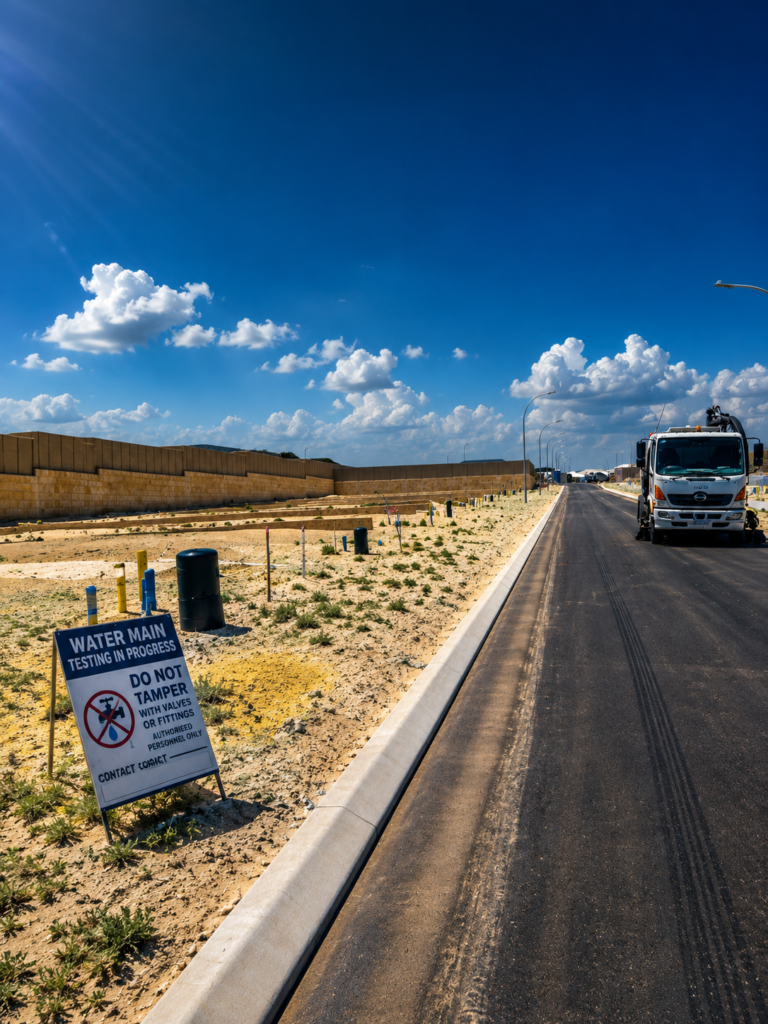
The newly installed water main was buried beneath deep sandy ground throughout the subdivision. These conditions can significantly reduce the effectiveness of conventional acoustic leak detection, particularly when dealing with a relatively small pressure loss.
The investigation also involved a large search area extending across multiple lots and road reserves, with no visible surface evidence showing where water was escaping.
With project handover approaching, the contractor required a non-destructive method capable of accurately locating the leak without excavating large sections of the newly developed site.
Advanced Tracer Gas Leak Detection
Commercial Leak Detection first confirmed the pressure loss identified during hydrostatic testing before introducing a specialist hydrogen and nitrogen tracer gas mixture into the pipeline.
The underground water main alignment was then traced using specialist pipe locating equipment, allowing our technicians to systematically survey the pipeline.
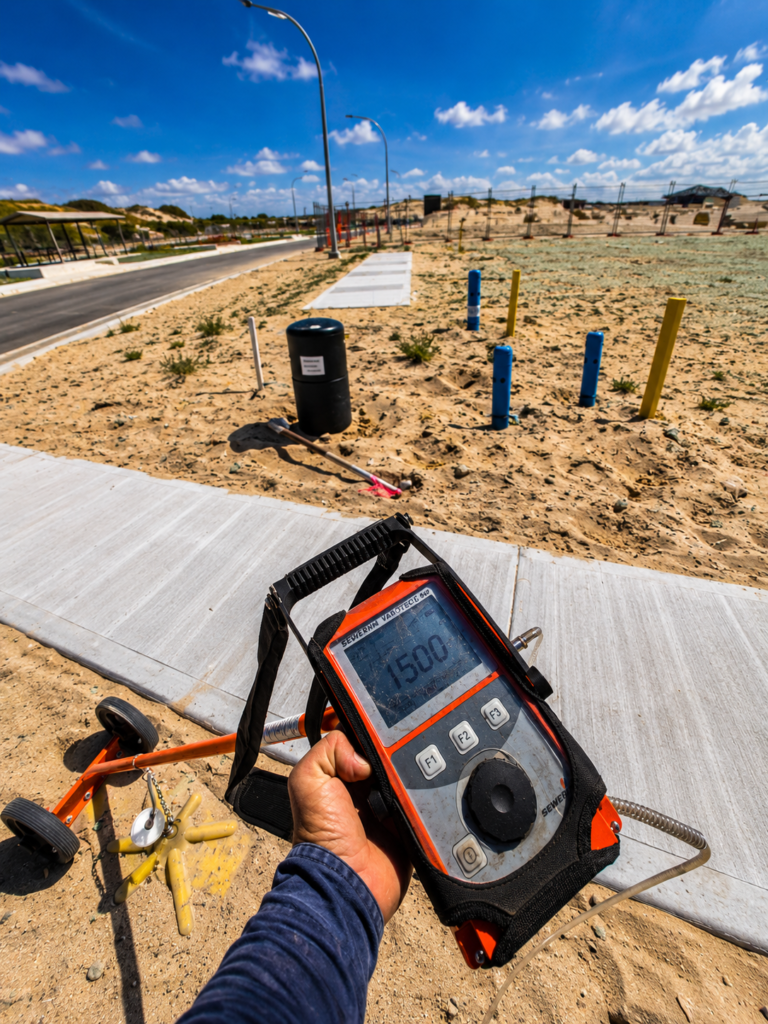
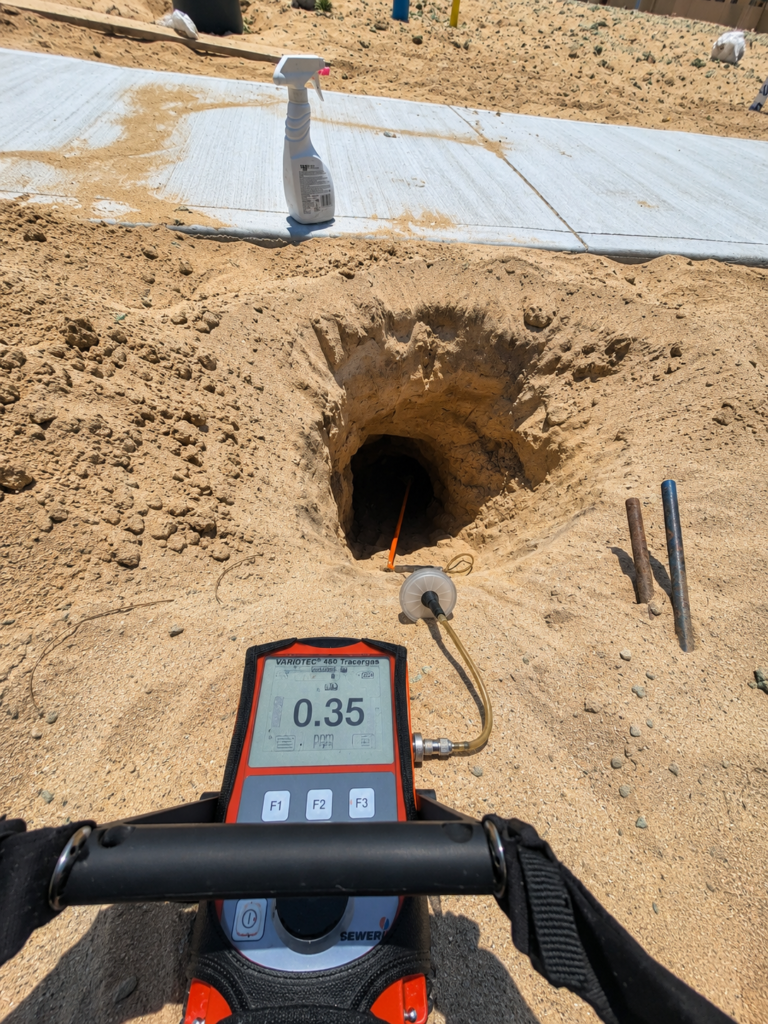
Using a Sewerin Variotec 460 Tracer Gas Leak Detector, the team surveyed the main for escaping tracer gas. Elevated gas concentrations were detected directly above the concealed leak, enabling the exact location to be identified and clearly marked for excavation.
This targeted approach was particularly effective in the deep sandy conditions, where acoustic detection methods were limited.
Equipment Used
Specialist equipment used during the investigation included:
- Sewerin Variotec 460 Tracer Gas Leak Detector
- Tracer Gas Injection System
- Underground Pipe Locator
- Pressure Testing Equipment
The combination of pipeline locating and tracer gas detection allowed the investigation to be focused on the underground water main while avoiding unnecessary excavation across the development.
Successful Project Outcome
Once the leak had been accurately located, the civil contractor excavated the identified area and exposed the affected section of water main.
The leak was repaired with minimal disturbance to the surrounding subdivision infrastructure. Following the repair, the pipeline was pressure tested again and successfully passed.
The accurate leak location helped reduce repair time and unnecessary excavation while allowing construction to continue towards project completion and handover.
Why Tracer Gas Leak Detection?
Tracer gas leak detection is particularly effective for locating concealed leaks in underground pressure pipelines where acoustic methods may be unreliable.
The technology can be highly effective for:
- New water mains and civil infrastructure
- Commercial developments
- Fire main systems
- Mining infrastructure
- Long underground polyethylene pipelines
Because tracer gas can migrate through soil and be detected at the surface, it provides an effective non-destructive method for narrowing down the location of otherwise difficult-to-find underground leaks.
Related Services
Whether you’re dealing with a hidden water leak, gas leak or fire main leak, Commercial Leak Detectors provides accurate non-destructive leak detection services across Western Australia.
Explore our Water Leak Detection, Gas Leak Detection, and Fire Main Leak Detection services to learn how we help commercial, industrial and mining clients quickly locate underground leaks while minimising excavation and downtime.